

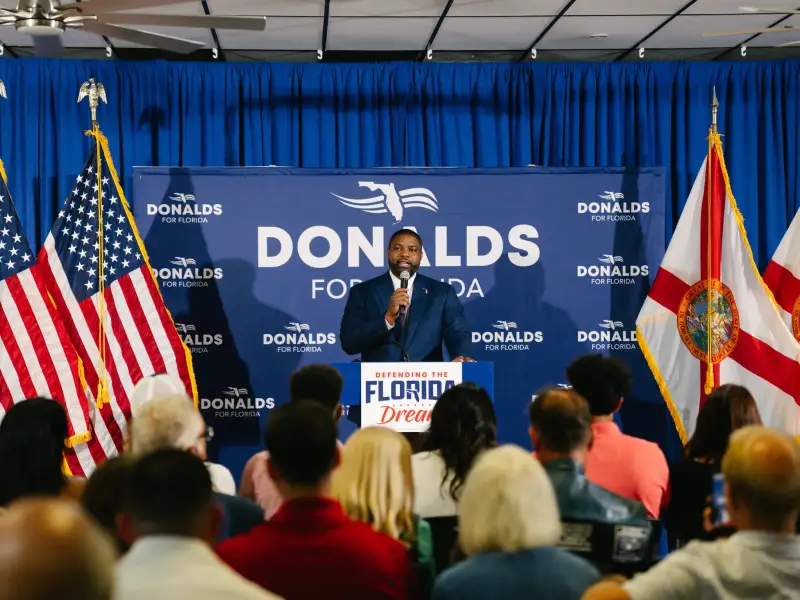
Florida’s 2026 primary unfolded as one of the most consequential political moments in recent state history, reshaping the landscape for the upcoming November elections and signaling the direction voters may be leaning as Florida prepares to choose a new governor and fill a U.S. Senate seat. The closed-primary system meant Floridians voted strictly within their registered party, creating sharply defined contests that highlighted ideological divides, new district boundaries, and the influence of national political figures.
The gubernatorial primaries drew intense attention. On the Republican side, U.S. Rep. Byron Donalds secured the nomination, entering the race as a well-known figure with the endorsement of President Donald Trump. His victory places him at the forefront of a historic moment, as he now stands positioned to potentially become Florida’s first Black governor. Donalds’ campaign emphasized continuity with Trump-aligned policies, and his win signals strong support from the party’s conservative base.
Democrats chose former U.S. Rep. David Jolly as their nominee, setting up a November showdown that will test whether Florida voters prefer a continuation of Republican leadership or a shift toward Democratic governance. Jolly’s campaign has focused on contrasting visions for Florida’s future, and his nomination reflects the party’s effort to rally around a candidate with statewide recognition.
The U.S. Senate primaries were equally pivotal. Republican Sen. Ashley Moody won her party’s nomination decisively, capturing nearly 80% of the vote in a race that demonstrated her strong standing among GOP voters. On the Democratic side, State Rep. Angie Nixon emerged victorious, defeating Alex Vindman in a closely watched contest. Nixon’s win represents a progressive surge within the party, marking her as a rising figure heading into the general election.
Down-ballot races also reflected the impact of Florida’s newly redrawn congressional map, approved earlier in 2026. The redistricting created new political battlegrounds, forcing incumbents and newcomers alike to navigate unfamiliar territory. Voters selected nominees in several competitive districts across South Florida, including Districts 20, 24, and 25, where candidates like Debbie Wasserman Schultz, Oliver Gilbert III, and Jared Moskowitz advanced to the general election. These races will play a significant role in determining Florida’s congressional delegation and could influence the balance of power in Washington.
The primary results collectively set the stage for a high-stakes November election. With Donalds and Jolly vying for the governor’s office, and Moody and Nixon competing for the U.S. Senate seat, Florida voters now face clear choices that reflect contrasting political visions. The outcomes also underscore broader national trends, including the strength of Trump-endorsed candidates, the rise of progressive Democrats, and the ongoing effects of redistricting on electoral dynamics.
As Florida moves toward the general election, these primary results offer a detailed snapshot of voter sentiment and political momentum. They reveal a state at the center of national attention, where every race—from governor to local congressional districts—carries implications far beyond its borders. Before relying on any election information, always confirm details with official state sources or certified results.
Add comment
Comments