

Election night in California was supposed to feel different. After months of knocking on doors, gathering signatures in grocery store parking lots, standing outside farmers markets, and explaining the same simple idea over and over, supporters of Proposition 39 went to bed believing common sense might finally win in the Golden State.
It did not. Not this time.
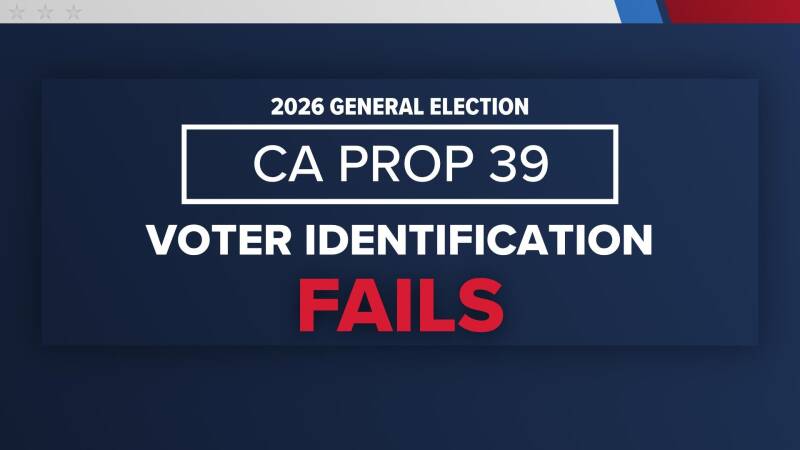
The Associated Press called it early. Prop 39, the voter ID constitutional amendment, failed with about 59% voting No and 41% voting Yes. With more than 5.1 million No votes to about 3.5 million Yes votes, the margin was not close.
And it happened on a night that was already brutal for Republicans nationally.
A Bloodbath Night For Republicans
You cannot sugarcoat what happened on November 3, 2026. It was a bloodbath.
Former House Speaker Newt Gingrich used that exact word, saying Republicans suffered a historic bloodbath in the midterms, losing control of both the House and Senate. The numbers backed him up. Republicans lost at least seven seats in the Senate and at least 25 in the House of Representatives.
Democrats flipped seats in places Republicans thought were safe. They flipped seats in Texas, Kansas, South Carolina, Ohio, and Iowa. They took governorships. They took the gavel in both chambers of Congress, leaving President Donald Trump facing a Democrat-controlled Congress for the final two years of his presidency.
In California, that national wave crashed right into Prop 39. It was not just a ballot measure going down. It was a ballot measure going down in the middle of a national repudiation, on a night when every Republican candidate seemed to be swimming upstream.
That is the context the defeat has to be understood in. Prop 39 did not fail in a vacuum. It failed on the worst possible night for anything with an R next to it.
And that is exactly why the people behind it are not walking away.
What Prop 39 Actually Was
Forget the noise. Prop 39 was simple, and that simplicity was the whole point.
It would have required voters to provide additional identifying information each time they cast a ballot in any election in California. When voting in person, you would show a government-issued photo ID. When voting by mail, you would write the last four digits of your selected government-issued identification number on the ballot envelope.
It also would have done three other things that never got enough attention.
First, it would have created a new state-issued voter identification card, free to any voter who requested one. Second, it would have required the Secretary of State and county elections officials to verify voters' citizenship. Third, it would have put all of it in the state Constitution, so it could not be wiped out by a single vote in Sacramento.
That was the vision from Reform California and Republican Assemblymember Carl DeMaio, who championed the measure as a common-sense way to protect election integrity. You show ID to board a plane. You show ID to buy cold medicine. You show ID to pick up a package. The argument was always the same: showing ID to vote is not radical, it is normal.
For millions of Californians, that argument landed. More than 3.5 million people voted Yes. That is not a fringe. That is a movement that showed up, even on a bloodbath night.
Why This Loss Stings So Much
Losing hurts more when you know you were right on the principle.
Supporters spent two years explaining that Prop 39 was not about making it harder to vote. It was about making it easier to trust the result. Every election, win or lose, ends with the same argument in California. Half the state does not believe the count. The other half does not understand why the first half is upset. Prop 39 was an attempt to break that cycle with a basic, bipartisan standard that most of the rest of the country already uses.
That is why the concession speech, if you can call it that, did not sound like a concession at all.
"Whether voter ID gets done in this election or not, we will not stop until we restore trust and confidence in our elections," DeMaio and his team said on election night. "Voter ID will become the law of the state of California because it is common sense and bipartisan."
Read that again. Not "we will try again someday." Not "we will see what happens." We will not stop.
That is the headline coming out of California, not the 59 to 41 margin. The margin is a snapshot. The commitment is the story.
The Playbook After A Defeat
Anyone who has been around California politics knows how this works. Ballot measures fail. Then they come back stronger, smarter, and better funded.
Prop 39 supporters are already talking about the next steps, and they are not theoretical.
1. A new initiative, written to win. The next version will learn from this fight. Expect clearer language, a longer runway, and an earlier start on signature gathering so the campaign is not playing catch-up in September and October. Expect a campaign that starts in January, not in the summer.
2. A legislative fight that does not go away. Even with a Democrat supermajority in Sacramento, voter ID will now be a bill that gets introduced every session. Every legislator will have to go on record. Every hearing will be a chance to put the issue back in the news. Defeat in November does not mean silence in January.
3. A local strategy. California is huge, and it is not monolithic. County by county, city by city, supporters are planning to push for voter ID resolutions, for local election integrity audits, for poll watcher programs, and for education campaigns that teach voters exactly what ID they already have and how easy it would be to use it.
4. A national connection. California was one of six states with voter ID on the ballot in 2026. Three passed. Three failed. The national movement is not dead. If anything, California's loss has made national donors and national organizations more interested, not less, because they see California as the biggest prize left.
This is not spin. This is how losing campaigns in California have turned into winning campaigns before. You lose the first time to introduce the idea. You win the second time because everyone already knows what it is.
Why They Will Not Give Up
There is a reason voter ID does not die in California, even after a 20-point loss on a terrible night for Republicans.
Poll after poll shows that ordinary voters, including Democrats, independents, Latinos, Black voters, and young voters, support showing ID to vote when you ask them the question plainly, without partisan framing. People get it. They live in a world where ID is required for everything else. The idea that voting should be the one exception has never made sense to them.
That disconnect between what Sacramento thinks and what regular Californians think is the fuel for this movement. You cannot kill an idea that people already believe is common sense just by beating it once at the ballot box on a wave election.
The other reason they will not give up is personal. The volunteers who gathered signatures for Prop 39 were not paid operatives flown in from Washington. They were retirees in Orange County, moms in the Central Valley, small business owners in San Diego, veterans in Riverside, and college students in Fresno who stood outside in the heat because they believed elections should have basic guardrails. You do not tell those people to go home and forget it. You tell them to get ready for round two.
What Happens Now In California
For now, California's current voting rules remain in place. No photo ID is required at polling stations. A voter's identity continues to be established with a signature.
That is the status quo Prop 39 tried to change, and that status quo is now going to be the central fight in California politics for the next two years.
Expect to hear about Prop 39 in every Republican primary debate in 2028. Expect to hear about it in every conversation about trust in elections. Expect to see it on clipboards again, because in California, an initiative that gets 41% on a bloodbath night is not a dead initiative. It is an initiative that was 9 points away on its worst night.
The people who opposed Prop 39 are celebrating this week, and they should enjoy it. They won the battle. What they did not do is end the war.
The Message From Election Night
If you were in the room on election night, you heard two things at once. You heard the disappointment when the Associated Press call came in. And then you heard something else, louder and more determined, in the minutes after.
We are not done. We are not going away. We are not going to let one bad night in a bad year decide the future of elections in the largest state in America.
That is what "they will not give up" actually means. It is not a slogan for a fundraising email. It is a promise from people who have already done the hardest part once, gathering hundreds of thousands of signatures to get on the ballot, and who know they can do it again.
Prop 39 failed. The movement behind it did not.
California said no on November 3, 2026. The next question is what California will say when they are asked again, with a better campaign, a better year, and a movement that has already been through the fire and decided to stay in it.
The bloodbath is over. The fight for voter ID in California is just getting started.
Add comment
Comments